What Is an RTR RC Car?
Quick Answer
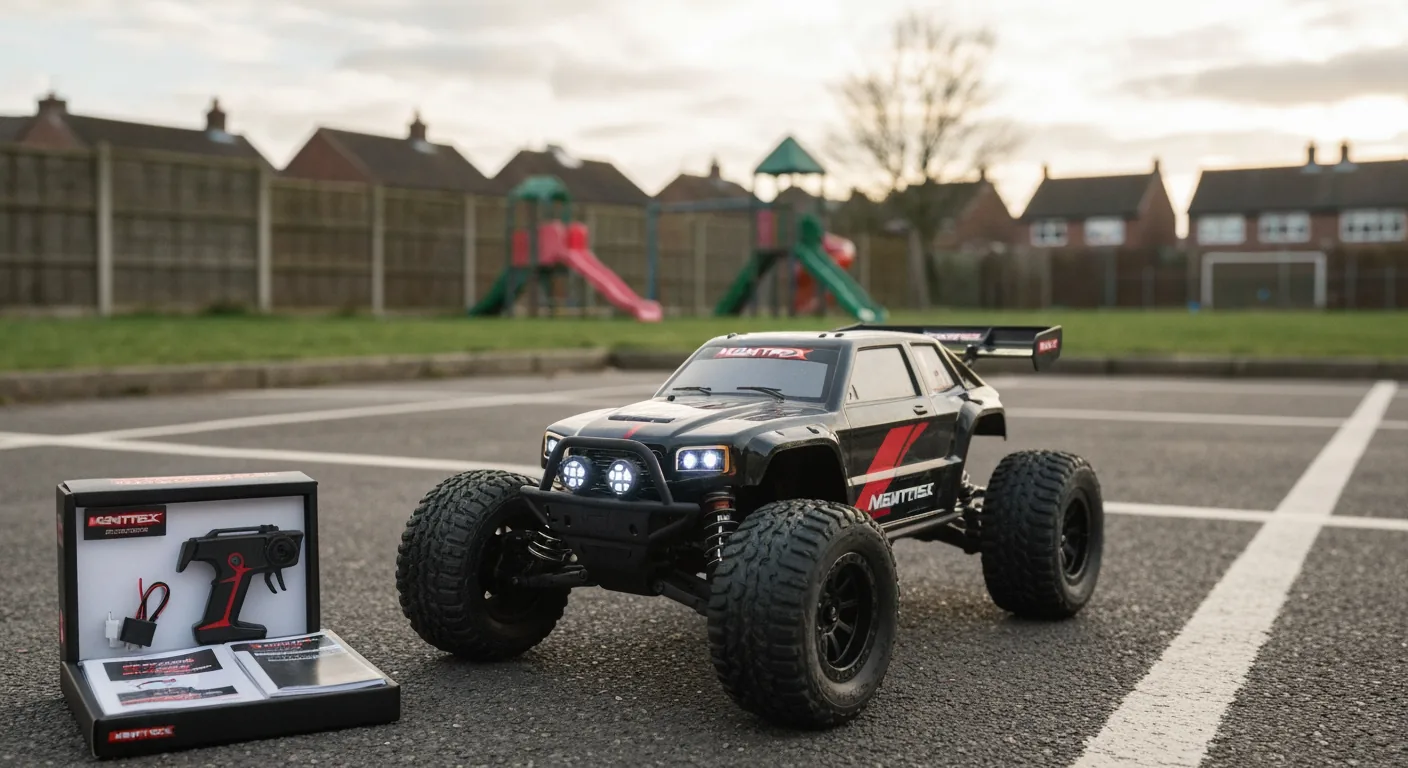
RTR stands for ready-to-run. An RTR RC car is sold as a complete, self-contained kit: the car body with electronics pre-installed, a transmitter (the controller in your hands), a battery pack, and a charger. You unbox it, charge the battery, and drive — no soldering, no assembly, no separate purchases required to get moving. The term originated in the RC hobby to distinguish complete kits from build-from-kit formats, which require the buyer to assemble everything from a box of parts. In 2026, the vast majority of 1/16 scale off-road RC cars sold in the UK claim to be RTR, but the definition has been quietly diluted: some listings omit the battery and charger yet still print RTR on the box. A true RTR car includes a battery already rated for the car's motor, a charger that fits that battery, AA cells or a USB cable for the transmitter, and a body shell that is already painted and clipped on. Both the MemTrex Standard (£69) and MemTrex Pro (£149) meet every one of those criteria — open the box, charge the included battery, and you are driving within 30 minutes.
RTR stands for ready-to-run. An RTR RC car is sold as a complete, self-contained kit: the car body with electronics pre-installed, a transmitter (the controller in your hands), a battery pack, and a charger. You unbox it, charge the battery, and drive — no soldering, no assembly, no separate purchases required to get moving. The term originated in the RC hobby to distinguish complete kits from build-from-kit formats, which require the buyer to assemble everything from a box of parts. In 2026, the vast majority of 1/16 scale off-road RC cars sold in the UK claim to be RTR, but the definition has been quietly diluted: some listings omit the battery and charger yet still print RTR on the box. A true RTR car includes a battery already rated for the car's motor, a charger that fits that battery, AA cells or a USB cable for the transmitter, and a body shell that is already painted and clipped on. Both the MemTrex Standard (£69) and MemTrex Pro (£149) meet every one of those criteria — open the box, charge the included battery, and you are driving within 30 minutes.
What RTR Actually Means — the Four-Letter Answer Most Retailers Blur
An RTR RC car should require zero additional purchases before first use. The BRCA (British Radio Car Association) and UK hobby community — including the editorial team at rcgeeks.co.uk — define RTR as a car that requires no additional components before first use.
RTR — ready-to-run — is an RC industry classification that means the car arrives fully assembled, fully equipped, and ready to drive straight from the box. A genuine RTR package contains the car itself with all electronics pre-wired and tested, a 2.4GHz transmitter loaded with the batteries it needs, a LiPo or NiMH battery pack matched to the car's power system, and a charger for that battery. The body shell is painted and clipped on; the wheels are fitted; the antenna is installed. Nothing about the car itself requires assembly. The classification exists because the RC hobby historically sold in kit format — buyers would spend an evening building the chassis from parts, then buy a separate motor, ESC, servo, battery, charger, and transmitter. RTR eliminated that barrier. The problem in 2026 is that some budget-tier Amazon listings print RTR on the box but ship without the battery, relying on the buyer to read the small print. This is not genuine RTR. The BRCA (British Radio Car Association) uses RTR to mean a car that requires no additional components before first use — and that is the standard MemTrex holds itself to.
If you are buying from a marketplace listing that does not clearly show a battery and charger in the box photograph, ask before purchasing. A car that arrives without a battery is not ready to run by any honest definition.
What's Inside a True RTR Box
Every genuine RTR car at the 1/16 hobby-grade level should arrive with the same core set of items, regardless of price. Understanding what should be in the box helps you identify listings that are cutting corners. eurorc.com covers RTR box content expectations for 1/16 scale hobby-grade RC cars in depth.
A true RTR RC car box at the 1/16 hobby-grade scale contains: the car body with suspension arms, wheels, tyres, chassis, motor, electronic speed controller (ESC), and servo all pre-installed and pre-wired; a 2.4GHz radio transmitter (the handset) with whatever battery type it requires — usually AA cells — already included; a rechargeable battery pack for the car, rated appropriately for the motor (on a brushed 1/16 this is typically a 2S LiPo of around 1000–1500mAh); a charger for that battery, even if it is a basic USB-to-JST type rather than a balance charger; and an instruction manual in English. The MemTrex Standard includes all of the above: a 2S LiPo, a USB charger, a 2.4GHz transmitter with batteries, and a printed manual. The MemTrex Pro includes the same, upgraded to a brushless motor and ESC, with a 2S LiPo sized for the higher power draw. Neither model requires you to source anything extra before your first drive. That is the RTR promise.
The instruction manual deserves a mention. A genuine hobby-grade RTR will include setup guidance, a spare-parts diagram, and basic troubleshooting. If your RTR arrived with a single sheet of diagrams in a font size designed to discourage reading, that is a signal about the brand's support posture.
What's NOT Included — Extra Batteries, AA Cells, Tools
Knowing what RTR does not include matters as much as knowing what it does.
RTR does not mean unlimited run time. The included battery in most 1/16 hobby-grade RTR cars gives between 12 and 25 minutes of use per charge, depending on driving style. When that battery is flat, you stop until it recharges — and USB-type chargers bundled with entry-level cars can take one to three hours to restore a 1000mAh LiPo to full capacity. RTR also does not mean infinite durability. Suspension arms, drive shafts, and tyres are consumable parts; a hobby-grade RC car is designed so these can be replaced, but the replacement parts are not included in the box. What RTR explicitly excludes: a spare battery (strongly recommended as a day-one purchase), a faster balance charger (beneficial but not essential), a screwdriver set for maintenance (most 1/16 cars use M2 and M3 cross-head screws), and replacement consumable parts. The MemTrex Standard spare battery costs £15; the Pro spare battery costs £25. Buying one at the same time as the car is the single most common advice given on r/rccars for first-time buyers, and it is advice we agree with entirely.
One thing frequently missed by first-time buyers: the transmitter in most RTR cars runs on AA batteries, not a rechargeable pack. Budget for a set of AAs or a AA charger and rechargeable cells. High-quality AA cells last many sessions in a 2.4GHz transmitter, but this is the one item RTR genuinely does not cover.
RTR vs Kit vs ARR vs Roller — When Each Format Actually Matters
The RC hobby uses several format classifications that occasionally confuse newcomers. horizonhobby.com publishes an authoritative format comparison that aligns with the industry-standard definitions used throughout this guide.
RTR (ready-to-run) is the complete package described above — the right choice for gift buyers, first-time buyers, and anyone who wants to drive, not build. Kit (also called KIT format) is the opposite: a box of parts with no electronics, no motor, no servo, no body shell — you build the entire chassis over several evenings, then source your own drivetrain components separately. Kit cars are for experienced hobbyists and BRCA racers who want to specify every component themselves. ARR (almost-ready-to-run) sits between: the car is mechanically assembled but requires a separate radio system, battery, and charger — most commonly seen in the £120–300 range for racing-oriented builds. Roller is a fully assembled chassis with no electronics at all — a blank canvas for club racers doing a drivetrain build. For 99% of UK buyers in the £60–170 price range — parents buying for children, adults buying their first hobby car, teens upgrading from toy-grade — RTR is the correct and only sensible format. MemTrex sells only RTR products precisely because the format removes every barrier between the buyer and the experience.
If someone has told you that kit-building is a prerequisite for real RC hobby engagement, they are wrong. See our how to choose an RC car guide for a full breakdown of formats and who each suits. The Kit format serves a specific purpose for a specific buyer. For everyone else, RTR is the right answer.
Best UK RTR Picks for Standard and Pro Buyers
Understanding where MemTrex sits in the RTR landscape helps you make the right choice.
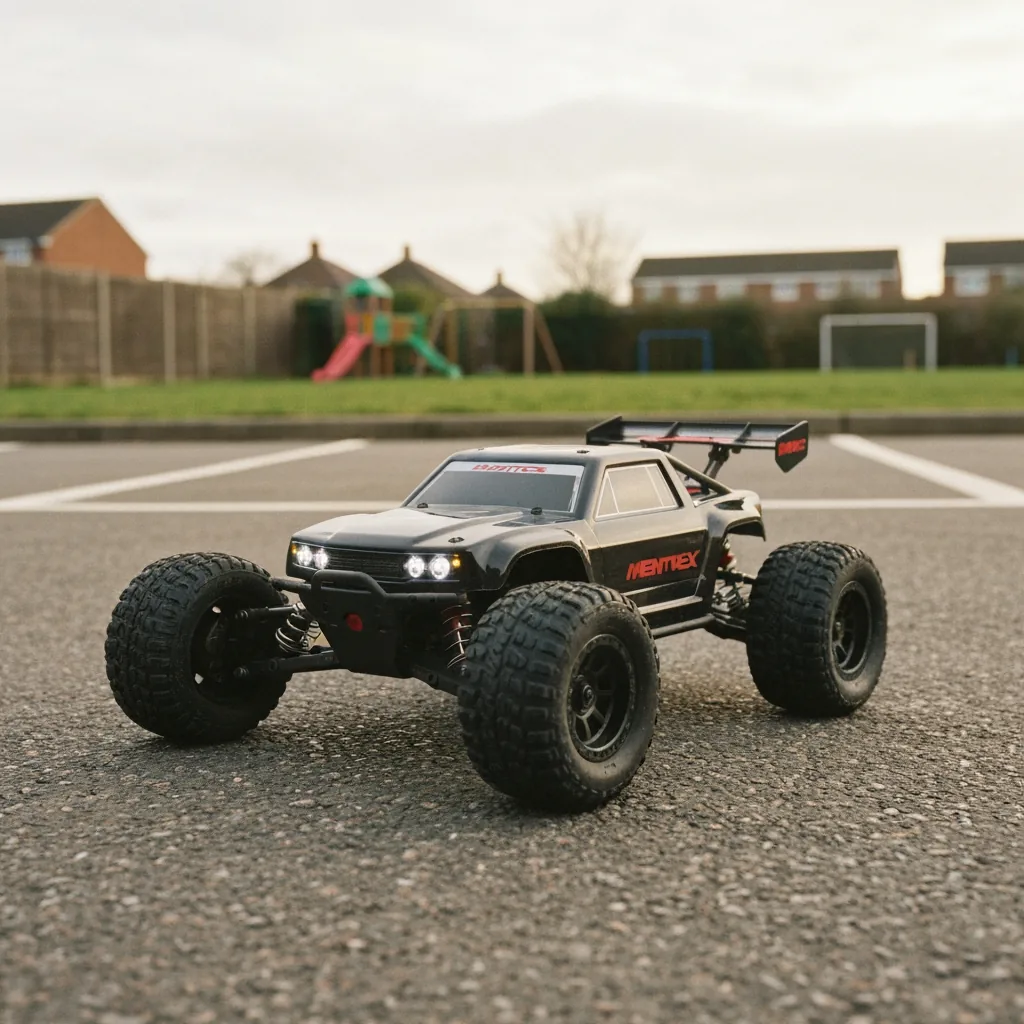
For UK buyers in the £60–90 range seeking a true RTR brushed 1/16 off-road car with UK spares and warranty, the MemTrex Standard is the direct answer. It runs to approximately 40km/h, comes with a 2S LiPo and USB charger, and is backed by a 2-year chassis warranty with parts stocked in Lancashire. No separate battery purchase is required to drive on day one, though buying a spare battery (£15) on the same order is strongly recommended for uninterrupted sessions. For buyers in the £129–169 range who want brushless performance — approximately 80km/h, factory speed-limited with an unlockable 5-press mode for experienced drivers — the MemTrex Pro delivers genuine RTR brushless 4WD with splashproof electronics. Both cars meet the functional definition of RTR: no additional components are required before first use. The difference between them is motor technology, top speed, and the type of buyer each suits. You can read the full comparison at Standard vs Pro or go straight to the MemTrex Standard and MemTrex Pro product pages.
Frequently Asked Questions
Do I need to assemble anything when I buy an RTR RC car?
No. A genuine RTR car arrives fully assembled with all electronics pre-installed. You charge the included battery and drive. MemTrex Standard and Pro both meet this definition — no tools, no soldering, no configuration required before first use.
Is the battery included in every RTR RC car?
It should be, but not always. Some budget listings print RTR on the box but ship without a battery. Always check the listing photographs and product description. Both MemTrex models include the battery and charger as part of the RTR package.
How long does it take to charge before first use?
Using the included USB charger, a MemTrex Standard 2S LiPo takes approximately 60–90 minutes from flat. A balance charger (sold separately) can reduce this to 40 minutes. Allow at least 90 minutes from opening the box to driving for your first session.
What does AA batteries for the transmitter mean — are those included?
Transmitter AA cells are included in both MemTrex models. You do not need to buy separate AA batteries before your first drive. We recommend keeping a spare set on hand for future sessions.
Can I upgrade an RTR car, or is it fixed as-is?
Most RTR hobby-grade cars, including MemTrex, use standard-spec components that can be upgraded. Common upgrades include a higher-capacity LiPo battery, metal gear sets, and upgraded tyres. The spare-parts architecture is the same as the upgrade-parts architecture — if we stock the replacement part, you can install a better version.
What is the difference between RTR and a toy-grade RC car from a supermarket?
A supermarket toy-grade car may be pre-assembled and include a battery, but the internal components — sealed proprietary circuits, non-replaceable motors — mean it cannot be repaired. True hobby-grade RTR uses standard components available as spares. When a suspension arm breaks on a MemTrex, you order the £3 replacement; when one breaks on a sealed toy, you buy a new car.
The RC car you're not afraid to crash
Two cars, both RTR. UK warranty, UK spares, UK support — every car backed by people who answer the phone.